Curved tempered glass is a made-to-order product, so there is no single "market price." In practice, most fabricators calculate quotes as a base rate per square meter multiplied by a process difficulty coefficient. Understanding the four factors below will help you evaluate quotes and avoid low-price traps.
1. Raw Glass & Thickness — the Core of the Base Price
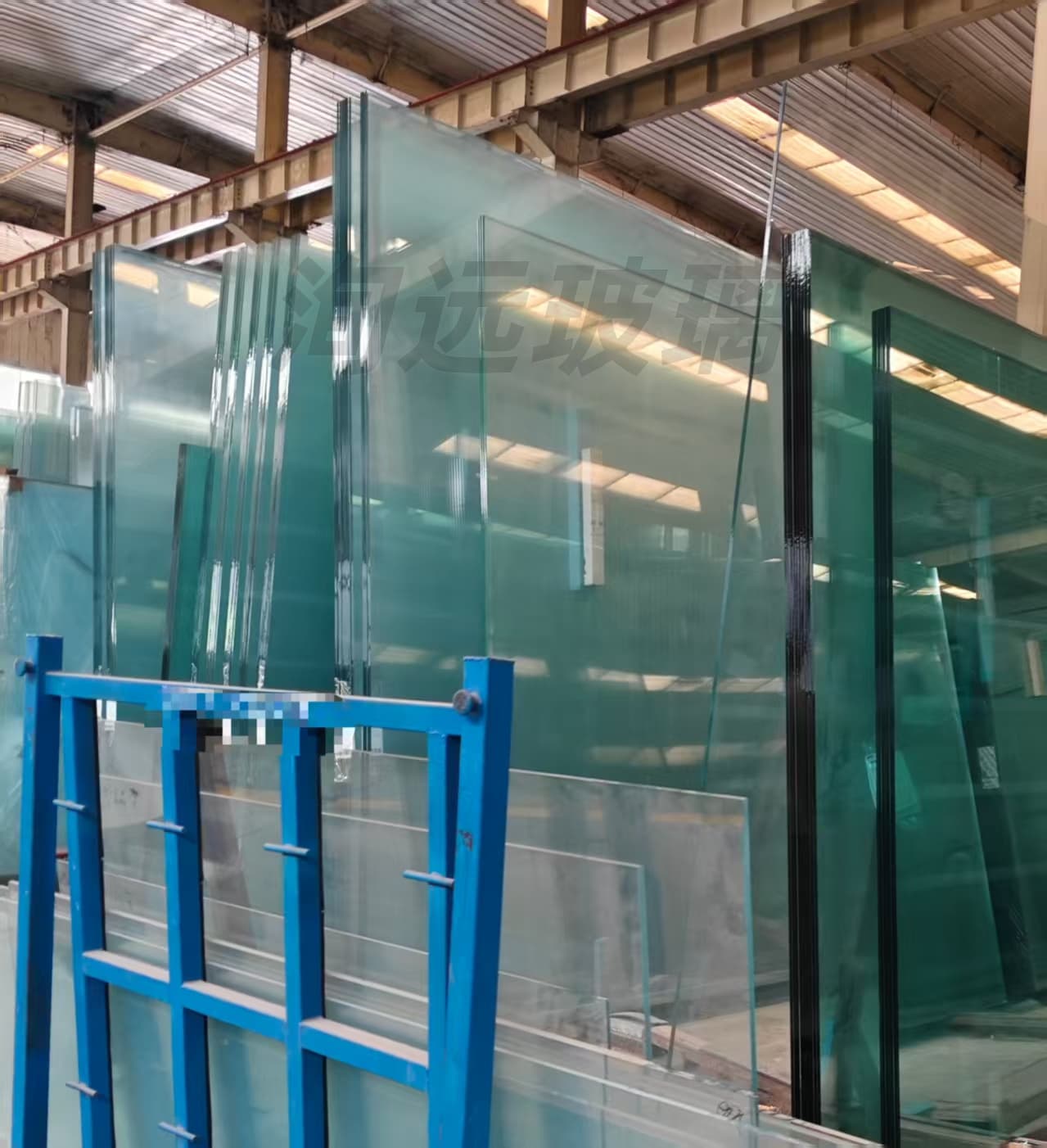
Raw glass accounts for the largest share of cost and determines quality. First-tier brands such as Xinyi, CSG (Nanbo), Taiwan Glass and Jinjing offer better flatness, fewer impurities and more stable performance, at a higher price. Common thicknesses range from 5mm to 19mm; the thicker the glass, the higher the material and processing cost. If your drawings specify a particular brand, state it clearly at the RFQ stage — otherwise some suppliers may quote low using generic raw glass, which can cause acceptance disputes later. XunYuan Glass regularly uses first-tier brand raw glass and can procure strictly per your specified brand, with traceable supply channels.
2. Size & Radius — Directly Reflected in the Difficulty Coefficient
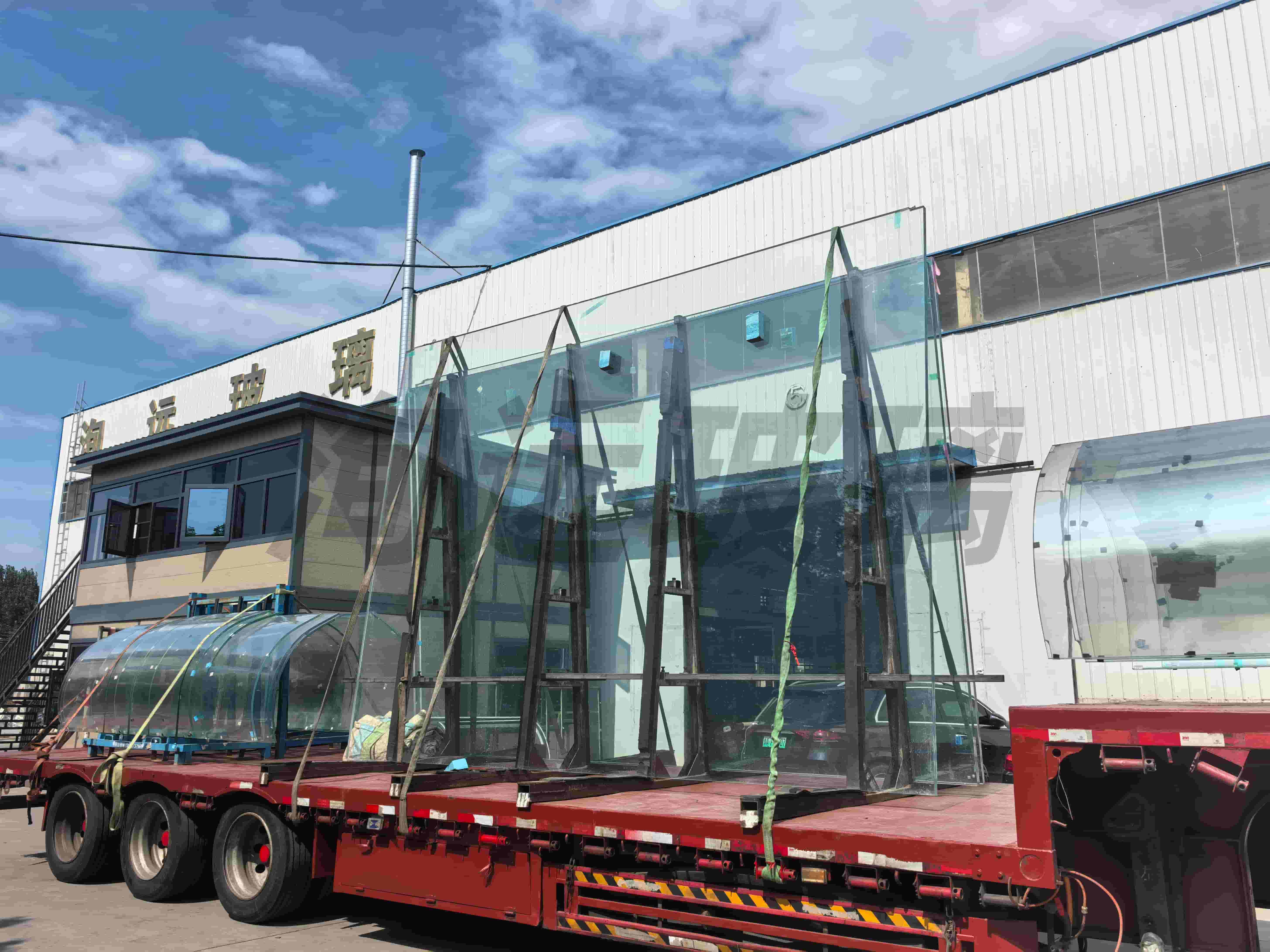
The price gap between curved and flat tempered glass comes mainly from the forming process. Oversized panels require wider furnaces and more uniform heating, so a proportional surcharge applies. Smaller radii are harder to control and have higher breakage rates: a small-radius curve around 300mm, for example, is quoted noticeably higher than gentle curves.
3. Lamination & Combination — Each Process Layer Adds Cost
A single curved pane is the cheapest option. Additional functions stack up process by process:
· Curved + laminated: adds interlayer film and lamination cost (SGP is more expensive than standard PVB);
· Curved + insulated: adds spacer bars, sealant and assembly cost (argon filling and Low-E coating are charged extra);
· Curved + ceramic frit / sandblasting: adds surface treatment cost.
A triple combination (curved + insulated + Low-E) simply adds each process layer on top of the base curve. XunYuan Glass runs all processes in-house, so combinations never need outsourcing — costs stay controllable and quotes remain stable.
4. Special-Shape Processing & Precision (general industry practice; confirm exact rates with the factory)
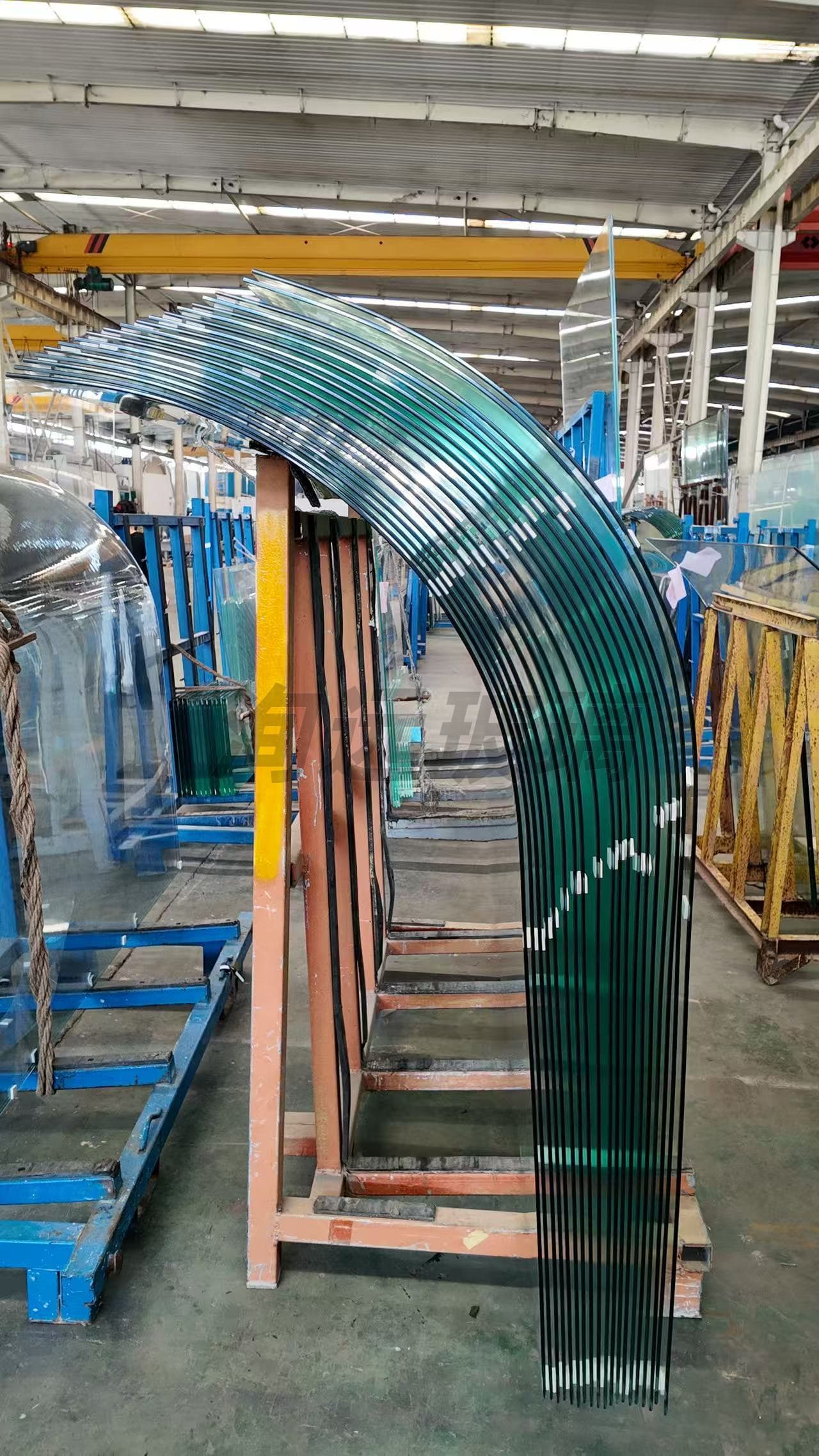
Holes, notches, rounded corners and other edge treatments are charged by process complexity. J-shape, hook-shape, S-shape and spherical curves are more difficult than regular arcs and command a premium. Orders with tight tolerances add inspection steps, which is reflected in the unit price.
Tips for Buyers
Ask fabricators for a detailed process list when comparing quotes — check raw glass brand, thickness, each processing item and inspection item line by line. If a specific brand is required, put it in the contract.
For an accurate quote on your drawings, contact our sales engineers: [Phone] [Email] [Address], or send your RFQ with drawings via E-mail / WhatsApp. We will provide an itemized quotation following the framework above.