Curved Tempered Glass Quality: 4 Key Details to Pass Project Acceptance
For facade contractors, brand storefronts and observation elevator projects, glass quality failures—edge chipping, raw-glass impurities, poor flatness—usually surface only after installation, causing costly rework and failed acceptance. The good news: quality can be screened before installation by checking four key details.
1. Authentic Raw Glass
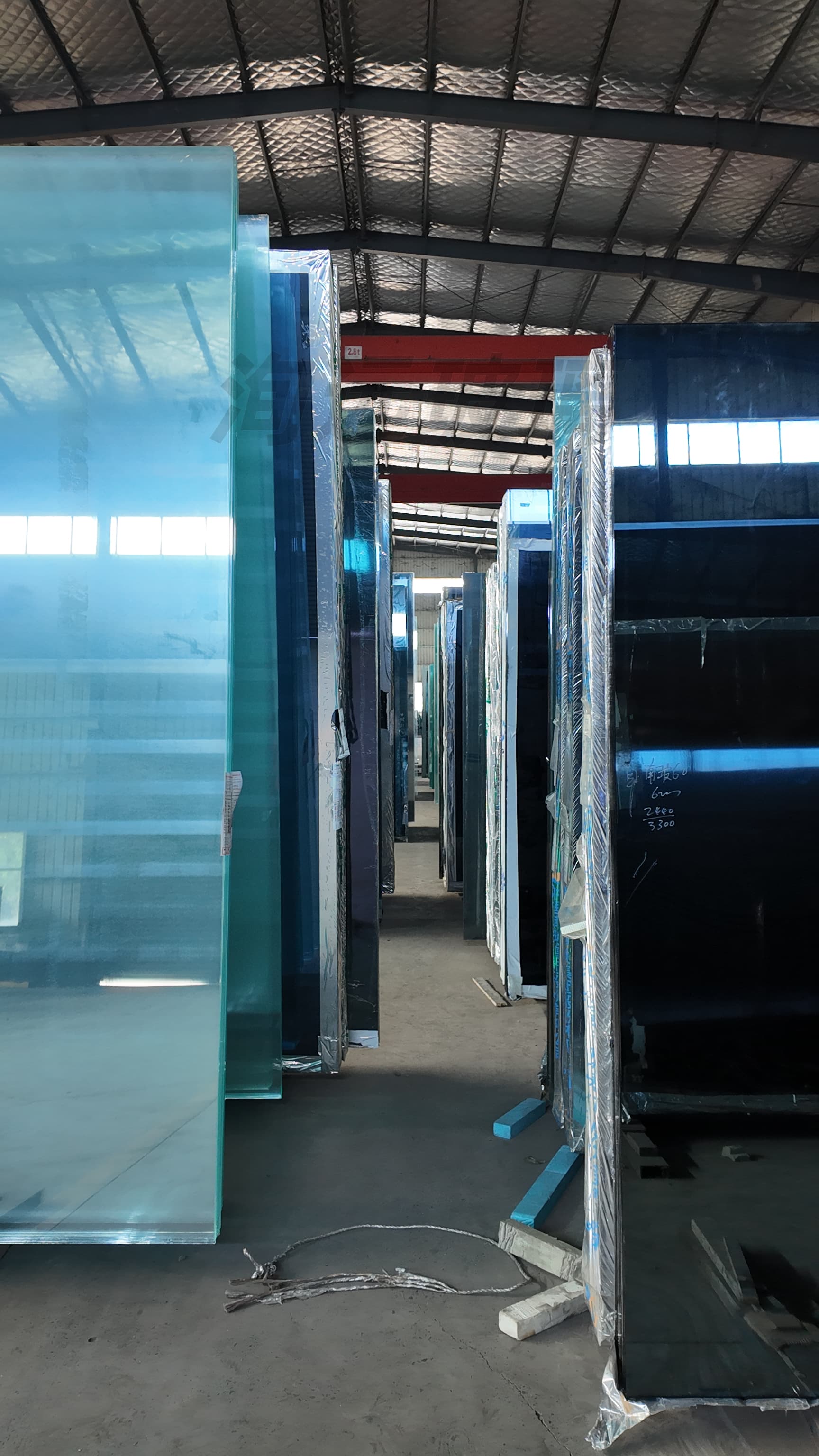
The raw glass determines the performance ceiling of the final product. Low-price suppliers often substitute ordinary glass for the brand specified by the client, resulting in more impurities, lower transmittance and uneven stress—risking spontaneous breakage later. Xun Yuan Glass routinely uses first-tier ultra-clear low-iron raw glass from Xinyi, CSG, Taiwan Glass and Jinjing, with traceable sourcing and on-site inspection available. Quick check: ultra-clear glass shows a light blue tint on the edge, while ordinary float glass appears greenish. For specified brands, request the mill certificate from the supplier.
2. Flatness
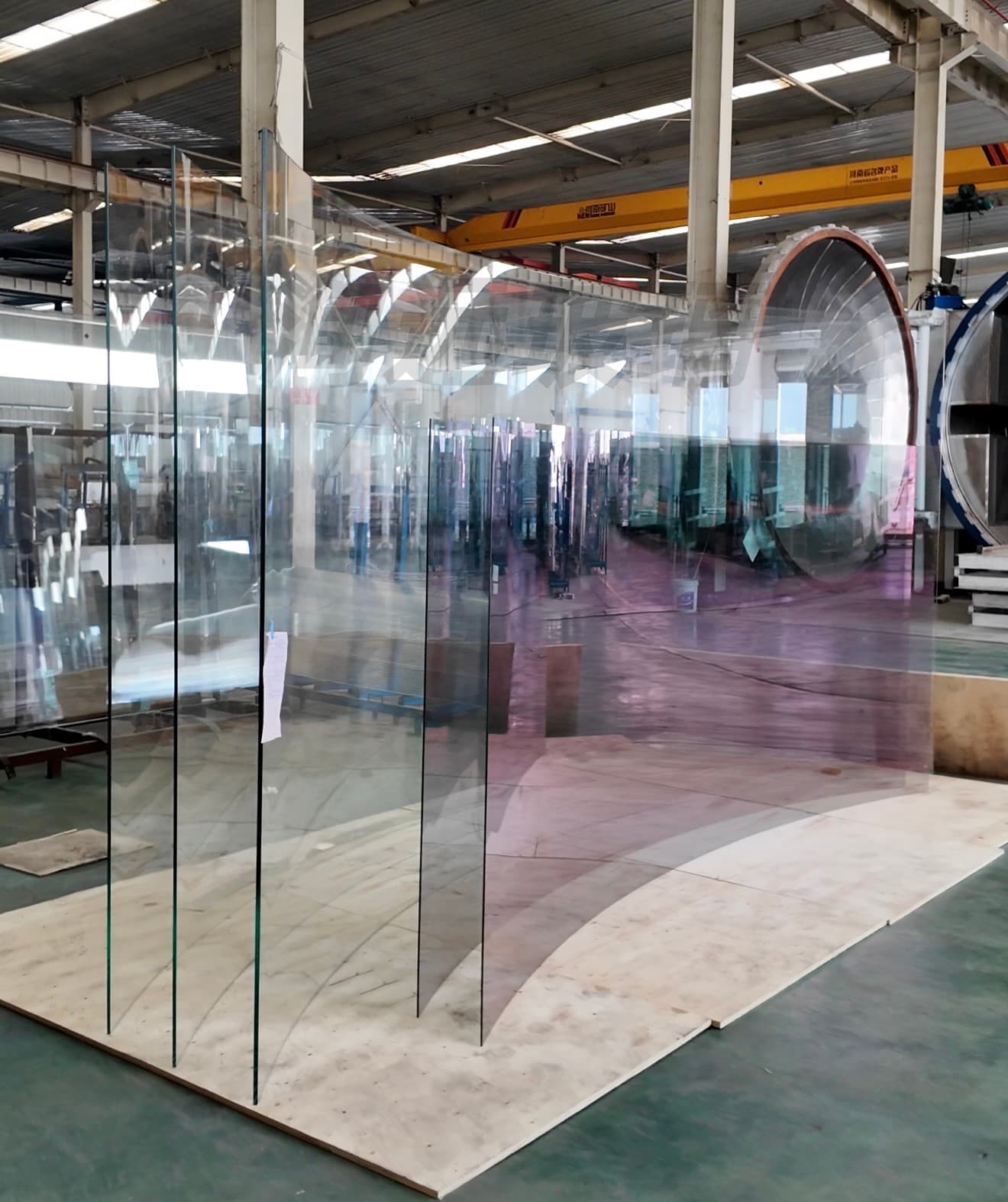
Flatness is the most failure-prone indicator for curved glass, directly affecting joint alignment and reflection quality. It depends on heating uniformity and cooling-stress control of the tempering furnace. Xun Yuan Glass operates a double-chamber forced-convection tempering furnace; through refined parameter tuning, diagonal error, flatness and wave deformation are all kept within national standard limits, meeting the visual requirements of commercial curtain walls and premium storefronts. On-site check: press a straightedge against the surface to inspect gaps, or compare curved panels against a reference sample for smoothness.
3. Edge Quality
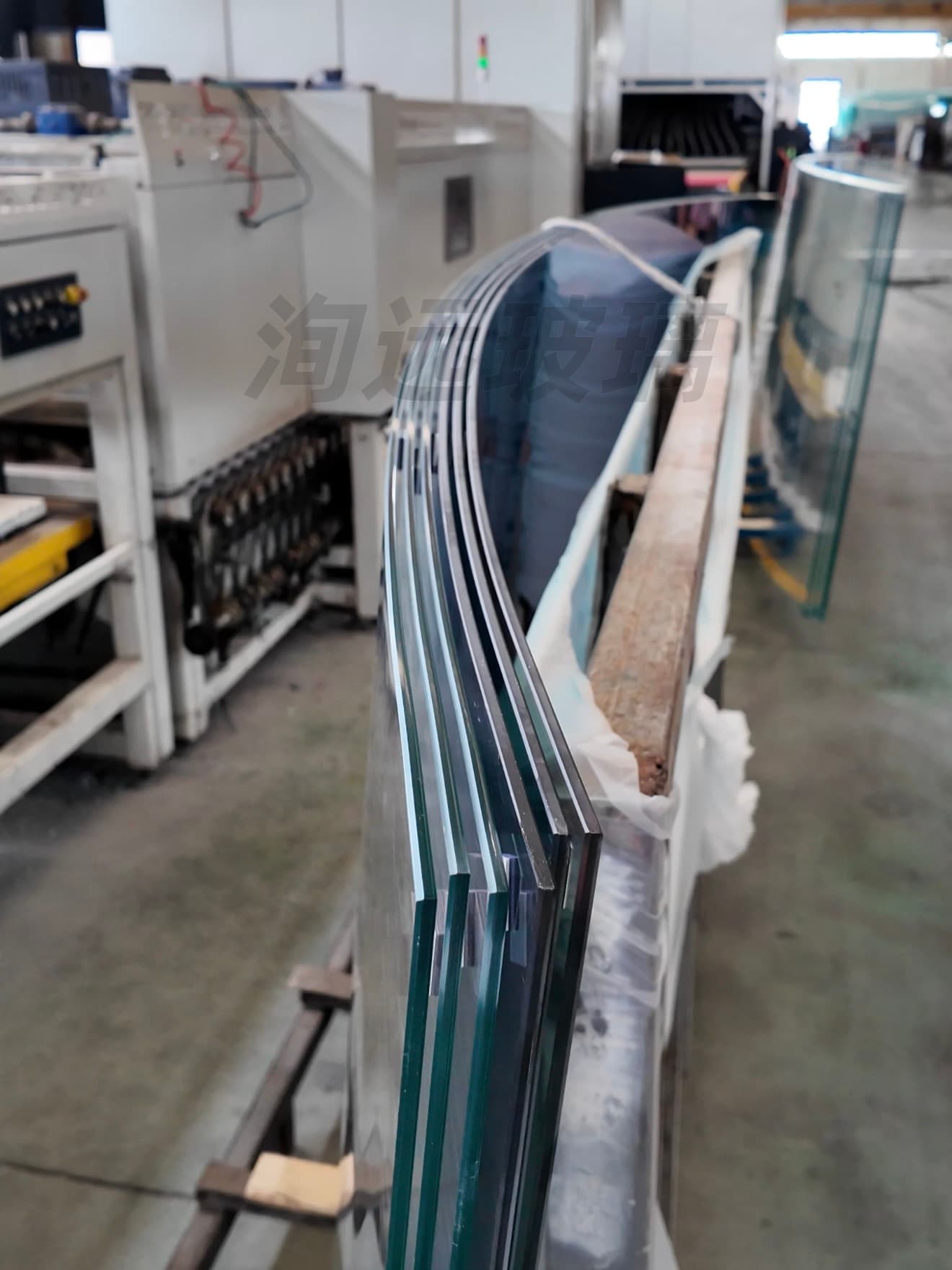
For exposed-edge applications such as railings and partitions, "smooth edges without chipping" is an explicit requirement. Rough edges with burrs, chips and notches are not only unsightly but also create stress concentrations that raise self-breakage risk. Xun Yuan Glass is equipped with CNC machining centers, edging and water-jet cutting lines, supporting fine edging, beveling and safety-edge treatment for smooth, chip-free edges with reduced stress concentration. Edge quality is a clear differentiator between workshops and source factories.
4. Certifications & Inspection Reports
CCC mandatory certification is the baseline for engineering applications; key projects also require stress, thickness and laminate weathering test reports. Xun Yuan Glass holds CCC certification and can supply corresponding inspection reports with delivery. Quality issues are handled directly by the production team for faster, more accountable after-sales response.
Practical Advice: Before a bulk order, request a sample of the same process from the factory. Confirm raw glass, edge quality and flatness first—then sign the contract. This single step avoids most quality pitfalls.
For RFQ or a sample request, please contact our sales engineers with your drawings and specifications.