Whether a small-radius curved glass unit is feasible, and whether it is repeatable, depends on how the forming and tempering stages control distortion along the curve — not on the unit price.** Henan XunYuan Glass Co., Ltd. runs arc-shaped tempered glass and small-radius curved glass through in-house production, processing and delivery. Cutting, edging, drilling, bending, tempering and lamination stay on one line.
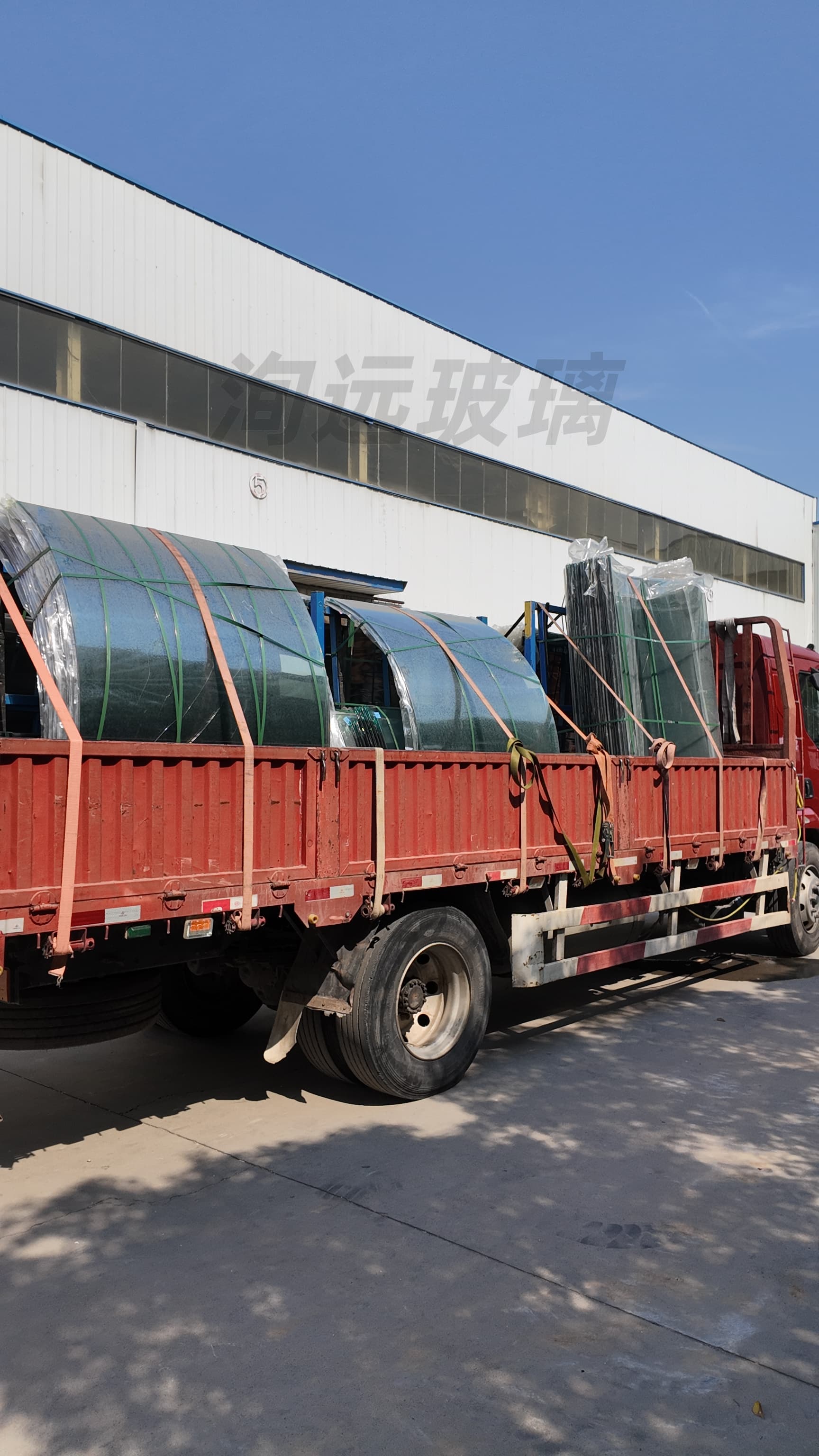
Capability boundaries
Normal bending: minimum radius 300 mm.
Thickness range: 5–19 mm, full range.
Reached along the arc direction, the longest unit is 8 m.
Pricing: calculated per square metre with a processing difficulty coefficient.
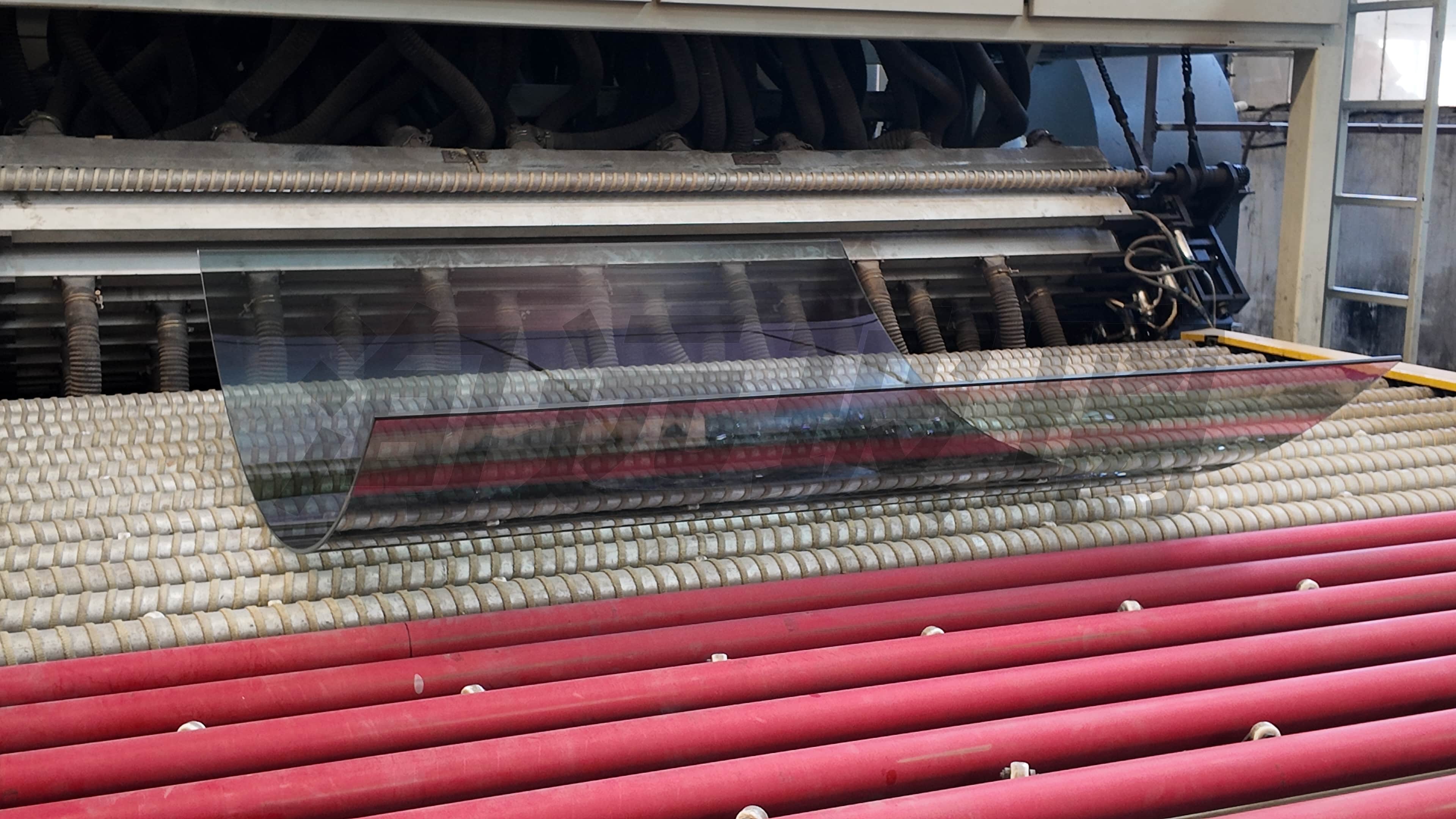
Products
Arc-shaped tempered glass, small-radius curved glass, ultra-clear curved glass and bent laminated glass, processed to drawing.
Applications
Curved facades on commercial complexes, curved hotel and office entrances, curved balcony glazing, lift shaft cladding, spiral stair balustrades, curved shopfronts, canopy and skylight arcs, and curved feature walls in showrooms.
Process control — the actions that run through every order
Smaller radii mean a sharper change of curvature across the panel. At the forming stage, mould fit, heating temperature and holding time must stay consistent from batch to batch. At tempering, the curve springs back, and that spring-back has to be compensated per order.
Curve check before drawing release. We calculate the curvature change from your drawings, flag the high-risk zones and confirm the mould plan. This happens at the design-development stage. What you gain: the processing boundary is clear before fabrication starts.
Spring-back compensation set per order. Forming temperature and holding time are re-set for each order instead of copied from the previous one. This happens before each order goes into production. What you gain: the gap between finished curve and design value is held at source.
First-piece approval before volume runs. No volume run starts until the first piece passes. This happens before batch production begins. What you gain: no full-batch rework, no second delay.
In-process sampling. Parameters are monitored through the run and corrected when they drift. Same-batch consistency is controlled within national standard ranges.
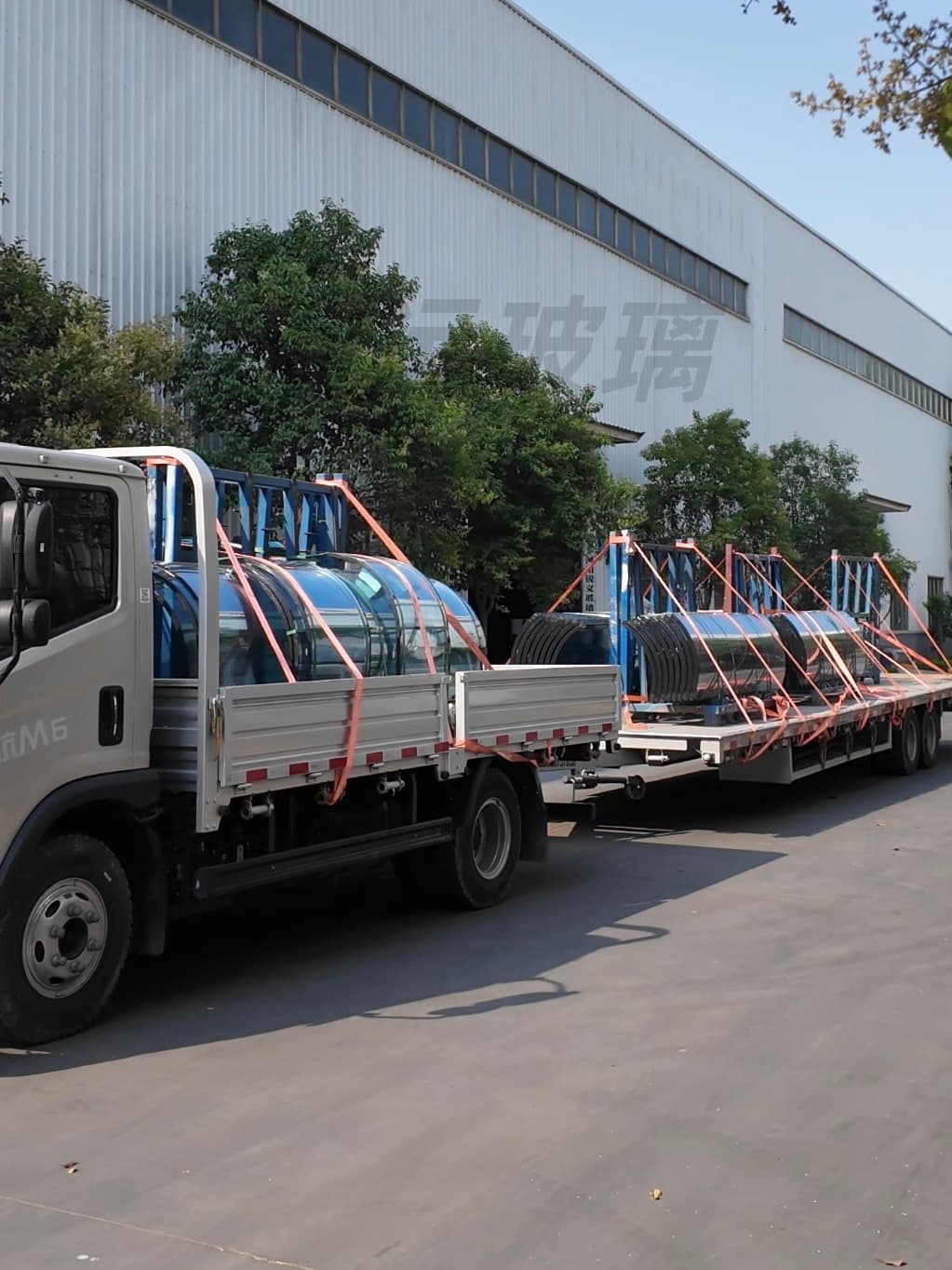
Why the quotation distinguishes radius classes
Small-radius work is harder to form and temper than standard bending. If both are quoted in one class, cost additions tend to appear later. We quote per square metre plus a processing difficulty coefficient, with each cost item listed separately, so quotations from different suppliers can be compared on the same basis. All stages run in-house; nothing is sub-contracted, so the parameter chain stays short and traceable.
Delivery and drawing service
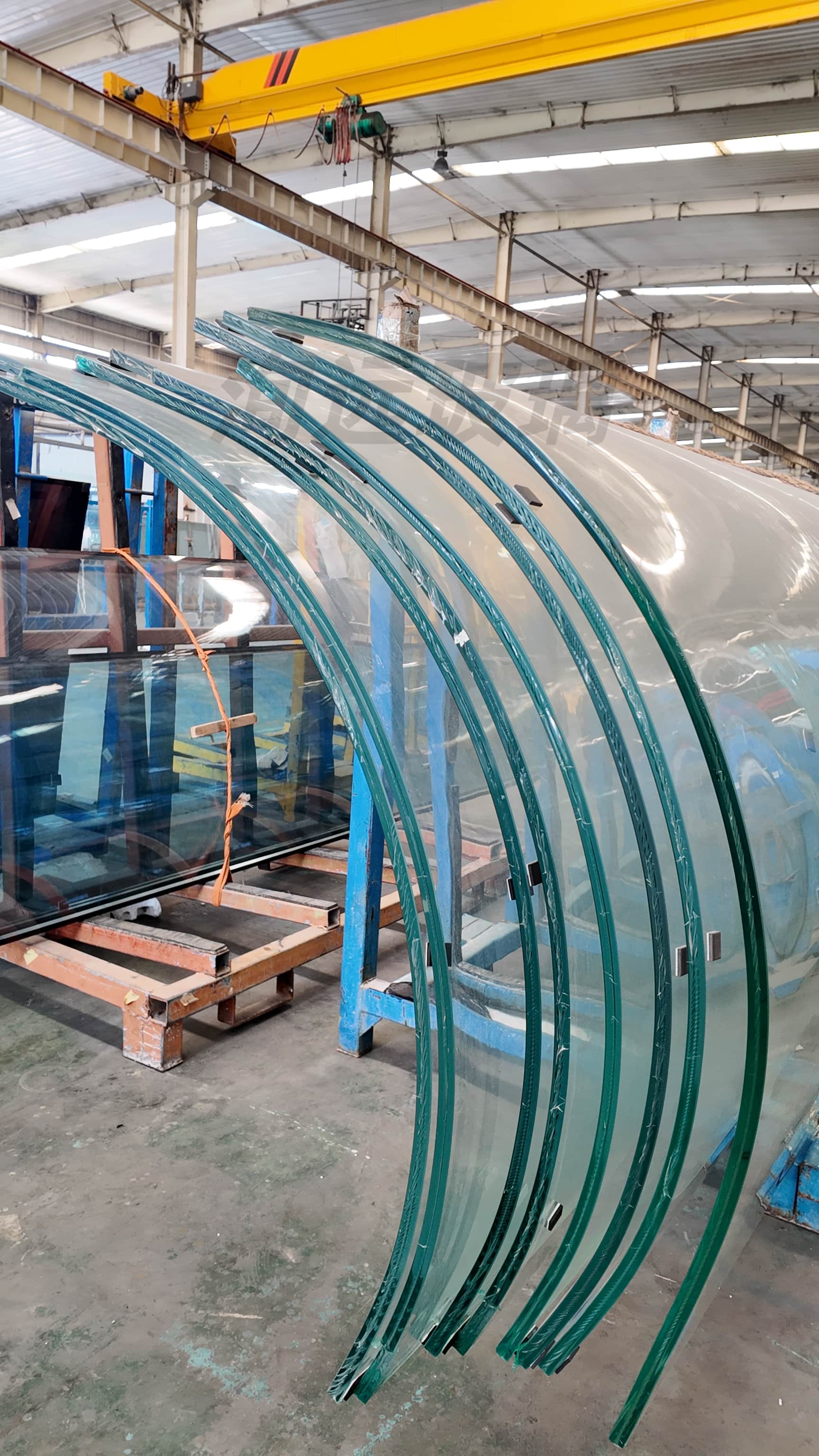
Scheduling starts once drawings are confirmed; the furnace slot is planned after drawing finalisation. Deep-processing drawings are issued within 24 hours, and curve feasibility is checked before quotation.
Three points you can verify
Ask the supplier to state the radius boundary and thickness range in writing.
Check whether the quotation separates radius classes and lists mould costs as a line item.
Ask for the drawing-release and first-piece approval nodes, not only the delivery date.