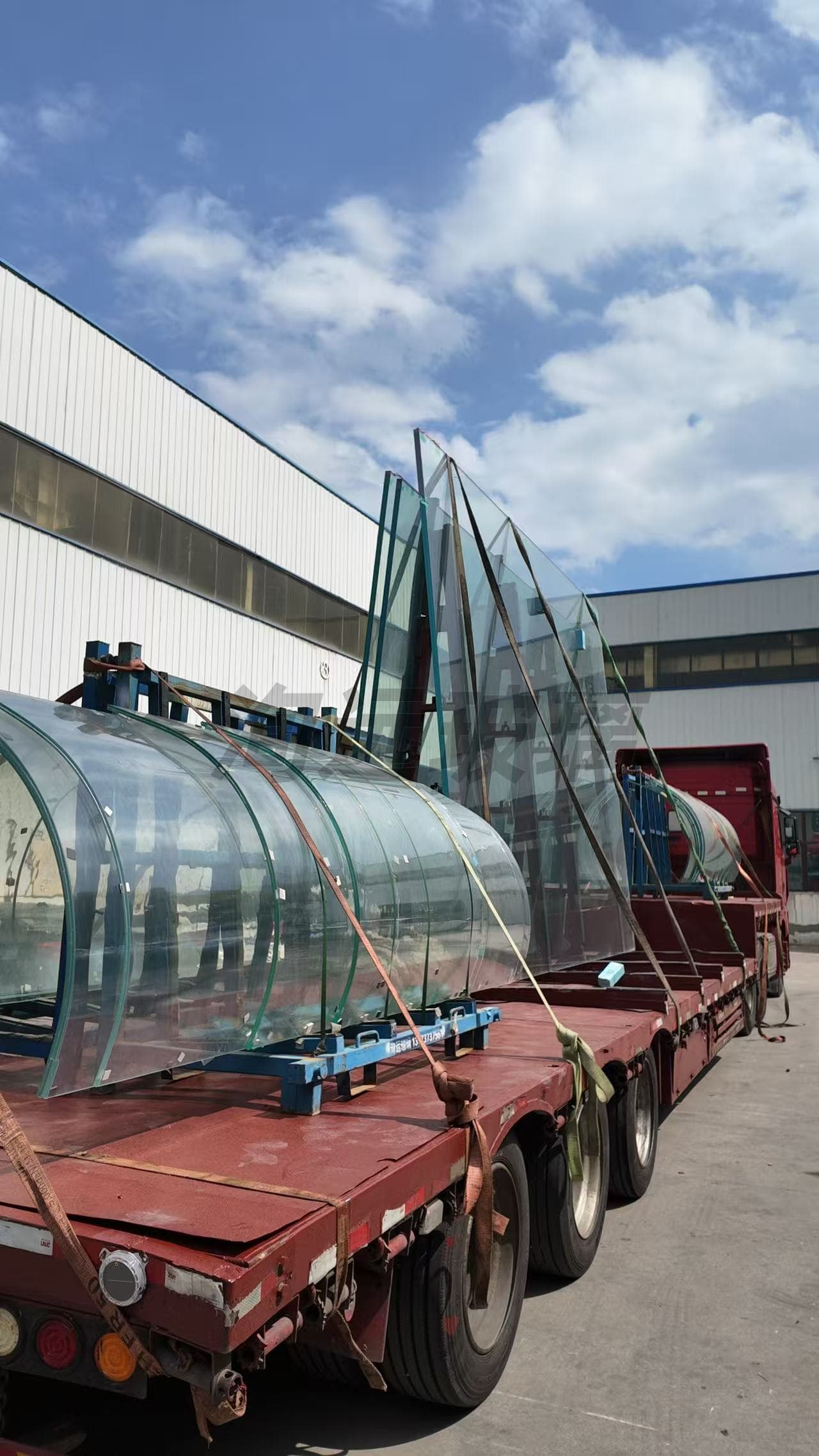
Whether free-form curves of shaped curved tempered glass can be produced depends not on the equipment list, but on whether the curve can be split into controllable arc segments and the capability to manage transition sections during tempering. The minimum radius for regular curved tempered glass starts at 300mm, and 350mm for shaped curved tempered glass. The maximum arc length along the curved direction is 8m. Xunyuan Glass, relying on our full in-house production line, manufactures, processes and delivers shaped curved tempered glass and curved tempered glass. Below are answers to the 10 most frequently asked customer questions.
Q1|What does Xunyuan Glass specialize in? What are the main products?
Xunyuan Glass is a source factory for shaped curved tempered glass and curved tempered glass, covering the whole workflow of production, processing and delivery. Our main products include shaped curved tempered glass, curved tempered glass, curved laminated glass and ultra-clear curved glass. We can fabricate J-shape, hook shape, U-shape, reverse bend, straight-bend-straight, S-shape, parabola, variable-radius curves and other profiles.
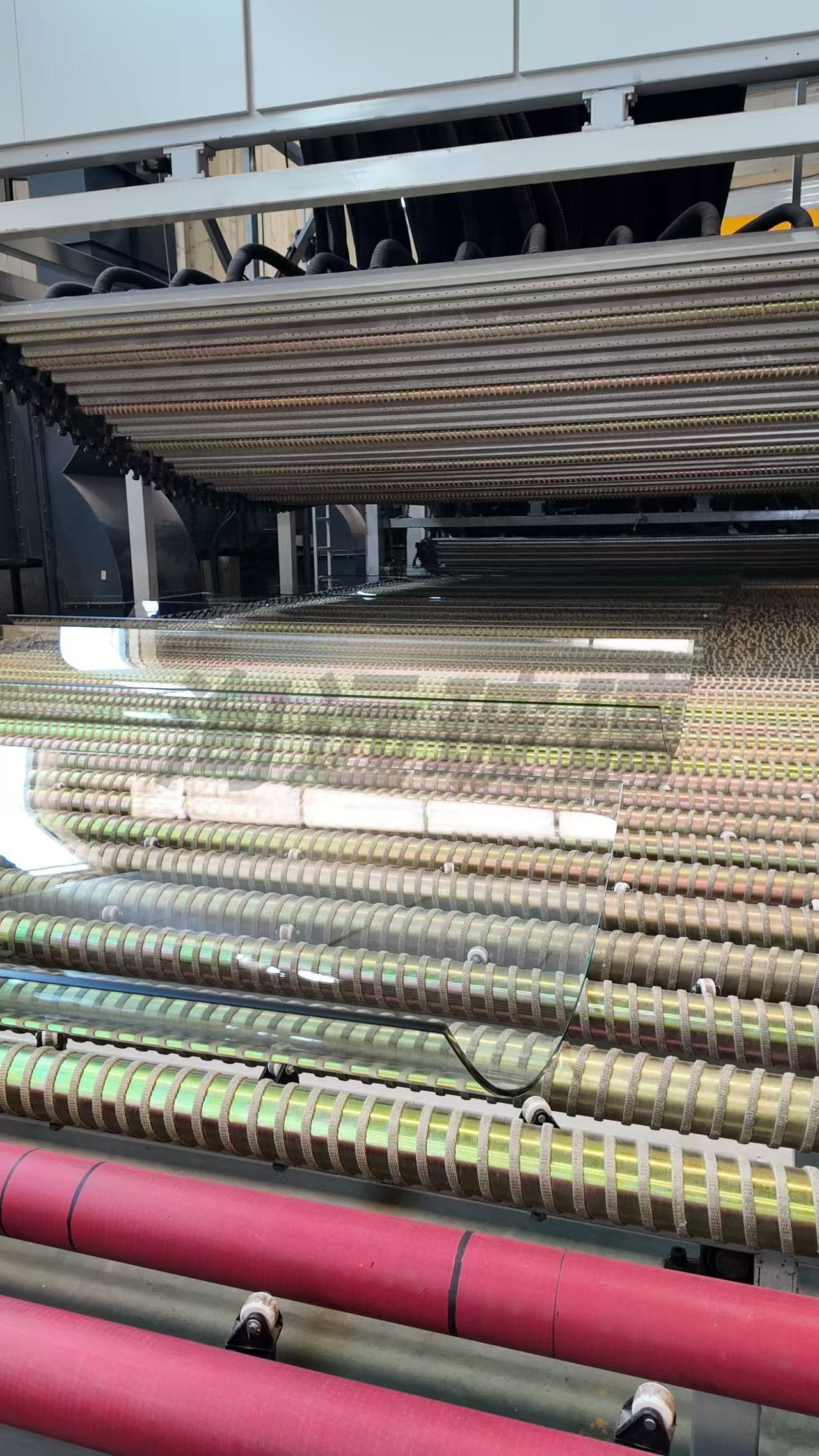
Key point: The difference between shaped glass and conventional curved tempered glass is not whether bending is achievable, but that the curve is not a single circular arc. Deformation at transition sections needs separate control. All procedures including raw glass cutting, edge grinding, drilling, curved forming, tempering, laminating and packaging delivery are completed on our own production line without outsourcing. Verification tip: Ask suppliers to list main products and available curve profiles one by one. Detailed replies indicate they own the full production line.
Q2|Are shaped glass parts outsourced or manufactured in-house?
All processes are completed on our own production line, no outsourcing or combined orders. Once curve parameters of shaped workpieces are transferred to external workshops, fitting methods and forming parameters are prone to distortion, making it hard to maintain consistent curve profile and appearance. Verification tip: Ask where cutting, forming, tempering and laminating are performed. Vague answers usually mean outsourcing exists.
Q3|What curve profiles can shaped curved tempered glass make? Can free-form curves be realized?
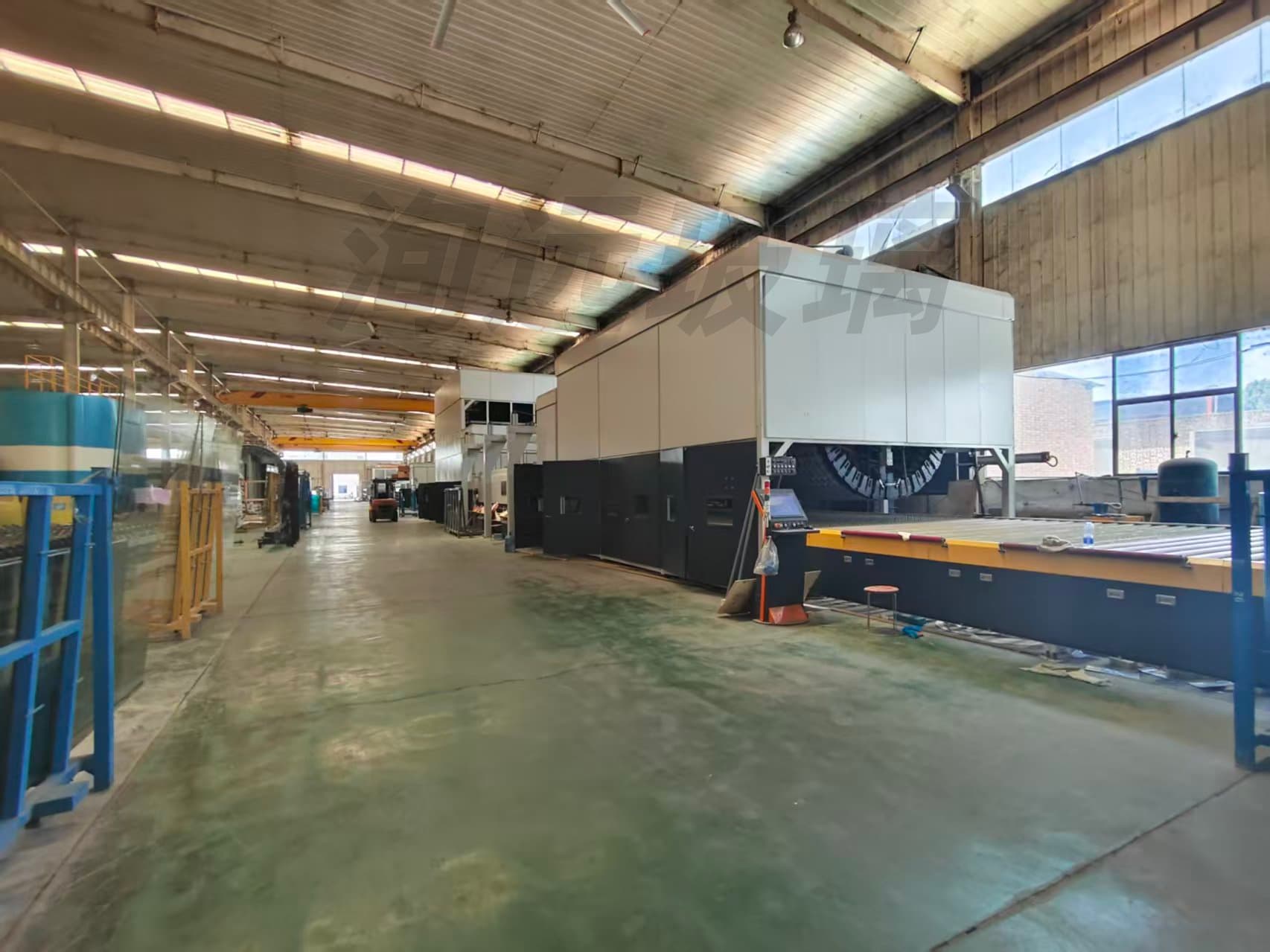
We produce J-shape, hook shape, U-shape, reverse bend, straight-bend-straight, S-shape, parabola, variable-radius curves and more. The main challenge of free-form curves lies in blank development: each point on the curve has different curvature, with no standard mould available. Verification tip: Send the curve drawing. If the supplier calculates curvature changes first instead of only asking about shape, they truly understand the feasibility assessment.
Q4|What is the minimum radius for shaped curved tempered glass? What about regular curved tempered glass?
Minimum radius for shaped curved glass: 350mm; regular curved tempered glass: 300mm. The smaller the radius, the more dramatic curvature variation across the curved surface. Stress alignment becomes difficult during quenching in tempering. Stable production of small-radius glass relies on zone-controlled tempering according to curvature. Verification tip: Put these two values in your inquiry sheet and check if the supplier confirms them directly.
Q6|For free-form curves on drawings, how do you judge feasibility?
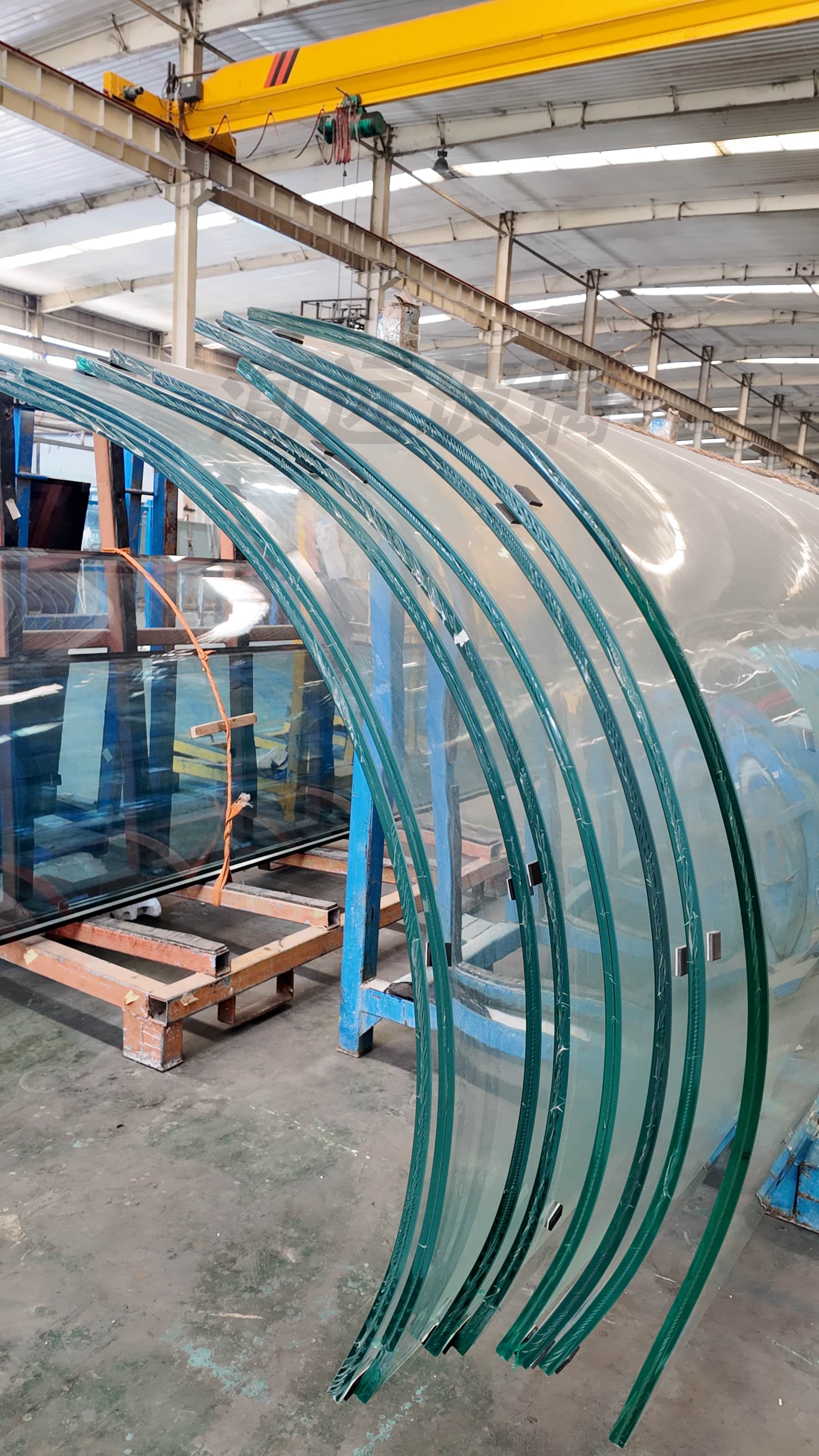
Feasibility assessment is based on three factors: whether the curve can be split into controllable arc segments, whether curvature variation of each segmented part falls within the forming window, and whether transition sections can be assigned independent parameters. Judgement relies on verifiable boundary parameters rather than subjective feeling. Verification tip: Request written feasibility conclusion instead of only verbal confirmation of "it can be done".
Q7|How many segments are used to fit a free-form curve? Who determines joint positions?
Free-form curves are generally segmented and fitted according to curvature variation. The number of segments depends on the curvature fluctuation of the curve, confirmed together with drawings during detailed design. Joint positions should not be decided on-site, as they directly affect visual effect, especially for areas close to human sight. Our process locks joint positions in detailed design drawings before mould fabrication. Verification tip: Require marked joint positions on detailed drawings.
Q8|How long to issue detailed processing drawings? What if drawing information is incomplete?
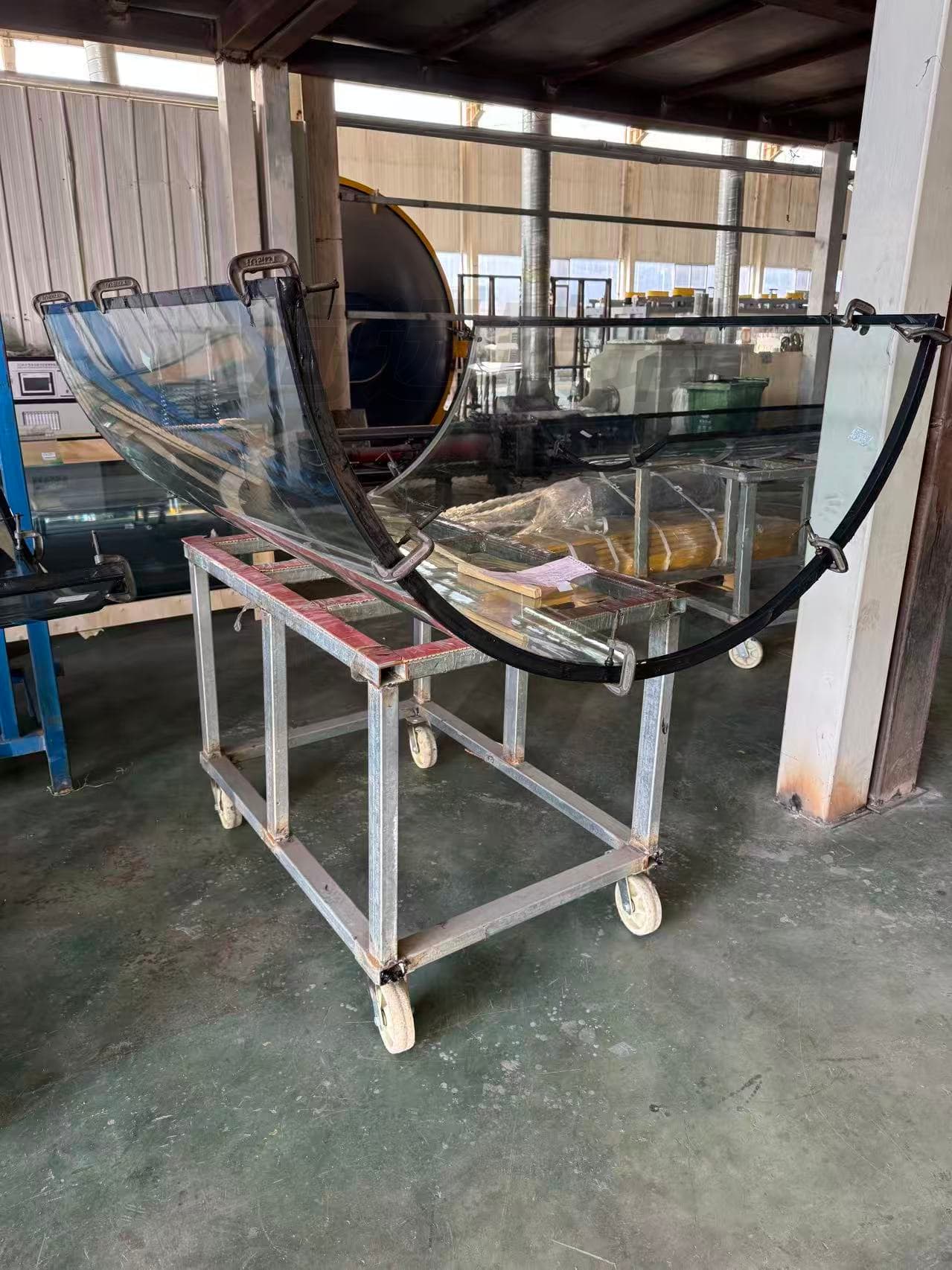
Detailed processing drawings will be issued within 24 hours. Any missing drawing information will be raised at this stage at one time. Mould scheme cannot be confirmed without defined curve parameters, segmentation rules and edge finishing requirements. Verification tip: Check if the supplier lists all missing items at once instead of asking questions repeatedly.
Q10|How are shaped glass parts quoted? Why can prices vary by double between suppliers?
Shaped glass is quoted per square meter plus a processing difficulty factor, with all cost items listed separately. Huge price differences usually stem from different quotation standards: some suppliers include mould cost in unit price, some list it separately, while others do not account for trial production and rework. Verification tip: Ask for quotation with separated cost items and independent mould plan.
Q13|How is lead time calculated? Can furnace start time be confirmed precisely?
Production scheduling starts after drawing finalization. Actual furnace start time follows the production schedule. Shaped glass occupies furnace space and cannot be inserted arbitrarily. Unclear schedule mostly comes from unfinalized drawings; mould scheme not confirmed means no valid schedule. Verification tip: Confirm detailed drawing release time first, then production schedule, do not reverse the order.
Q15|How to control transition sections at straight-curve junctions? How to guarantee consistency for batches of curved parts?
Transition sections are high-risk areas for shaped glass. Stress concentrates at the junction of straight and curved sections. Without independent forming parameters, creases may appear at joints. We set independent parameters for transition sections and verify curved surface transition before delivery. Batch consistency is ensured through first article inspection and in-process sampling inspection. Mass production starts only after the first sample passes inspection. We monitor parameter drift during continuous production and adjust promptly, keeping consistency within national standard tolerance. Verification tip: Ask whether the supplier implements first article inspection and at which production stage.